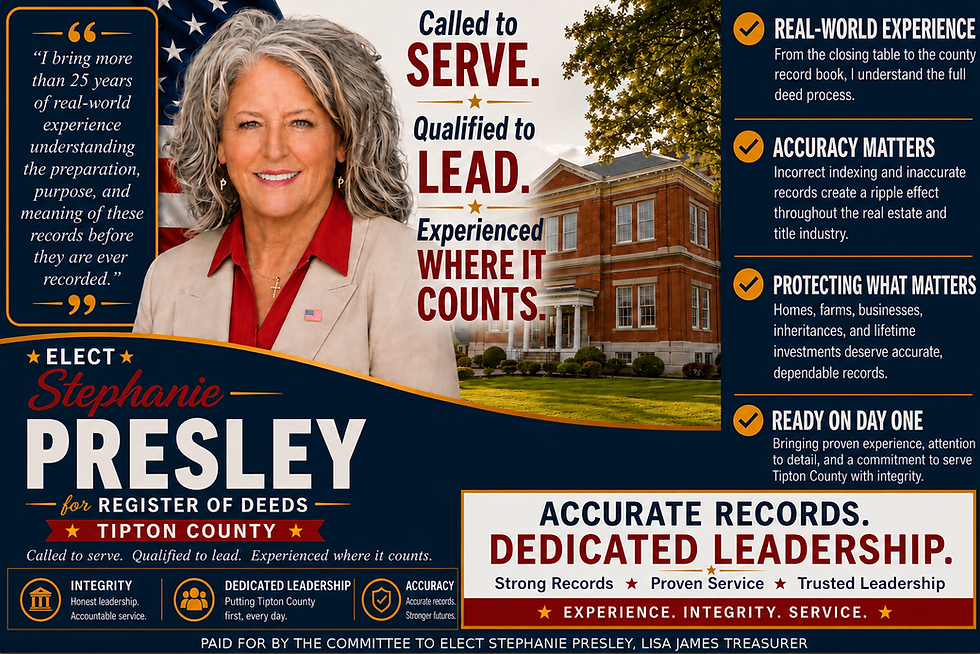
The Crucial Role of the Register of Deeds Office in Safeguarding Public Records
- stephaniepresley

- May 24
- 4 min read
What is the role of the Register of Deeds and the Office of the Register of Deeds?
What Does the Register of

Deeds Do — and Why Does It Matter?
When most people think about local government, they usually think about schools, roads, taxes, courts, or elections. But one of the most important offices in county government is also one of the least talked about: the Register of Deeds.
The Register of Deeds office is where many of a county’s most important legal records are received, recorded, indexed, preserved, and made available to the public. In Tennessee, the principal duty of the Register’s Office is to record deeds and other legal instruments that are required or allowed to be filed by law. That includes documents such as deeds, deeds of trust, mortgages, powers of attorney, plats, liens, military discharges, and other records affecting property and legal ownership.
In plain English: the Register of Deeds helps protect the paper trail of ownership, responsibility, and public record.
The Office Protects Property Records
Every time property changes hands, a deed may be recorded. When a home is financed, a deed of trust or mortgage may be recorded. When a loan is paid off, a release may be recorded. When land is divided, a plat may be recorded. Those records matter because they help show who owns property, what claims may exist against it, and what documents have been officially filed for public notice. The Register of Deeds does not decide who wins a property dispute, give legal advice, or act as the court. The office’s job is to properly receive, record, index, and preserve documents so the public record is clear and accessible. That may not sound flashy, but it is essential. Property ownership depends on records. Lending depends on records. Families, farmers, homeowners, businesses, attorneys, surveyors, title companies, banks, and local government all rely on those records being accurate and available.
The Office Is About Public Trust
The Register of Deeds office is not just a filing cabinet. It is a public trust.
When someone records a document, the office must handle it carefully. Tennessee law requires the register to determine whether an instrument is entitled to registration, note the time it is received, record it, and maintain proper indexes. That means details matter. Names matter. Dates matter. Book and page numbers matter. Indexing matters. One small mistake in a public record can create confusion later for a property owner, family member, attorney, lender, or future buyer.
A strong Register of Deeds office should be organized, professional, courteous, and careful. The work may be quiet, but it is foundational. Around here, that still counts for something.
The Office Serves the Public
The Register of Deeds office serves people from all walks of life.
A homeowner may need a copy of a deed. A veteran may need a recorded military discharge. A family may need to research old property records. A business may need to verify a filing. An attorney or title company may need accurate records for a closing. A citizen may simply need help understanding where to look. The office should be approachable. People should not feel lost, brushed off, or intimidated when they walk in. Good public service means helping citizens understand the process, pointing them in the right direction, and treating every person with respect.
The Register of Deeds Is Not the Same as Other County Offices
It is easy to confuse county offices because many deal with records in some way. But the Register of Deeds has a specific role. The Register of Deeds generally handles land records and certain legal instruments. The County Clerk handles many other services, such as vehicle transactions, marriage licenses, business licenses, and other duties. The Property Assessor values property for tax purposes, but assessment records are different from recorded deed records. Each office has its lane. The Register of Deeds' lane is the permanent public record of property-related documents and other instruments allowed by law.
Why This Office Still Matters Today
Even in a digital world, records still matter. Maybe now more than ever.
Technology can make access faster, searches easier, and service more efficient. But technology does not replace responsibility. The public still needs an office that values accuracy, preservation, privacy where required, and dependable customer service. The Register of Deeds office sits at the crossroads of history and the future. It preserves records from the past, serves people in the present, and protects information that future generations may depend on. That is the kind of work that deserves steady hands, attention to detail, and a servant’s heart.
Bottom Line
The Register of Deeds office may not always make headlines, but it touches some of the most important parts of everyday life: homes, land, family records, business transactions, legal documents, and public trust. It is an office built on responsibility. And when an office is responsible for preserving the public record, the people deserve leadership that is accurate, accessible, professional, and committed to serving every citizen with fairness and respect.